
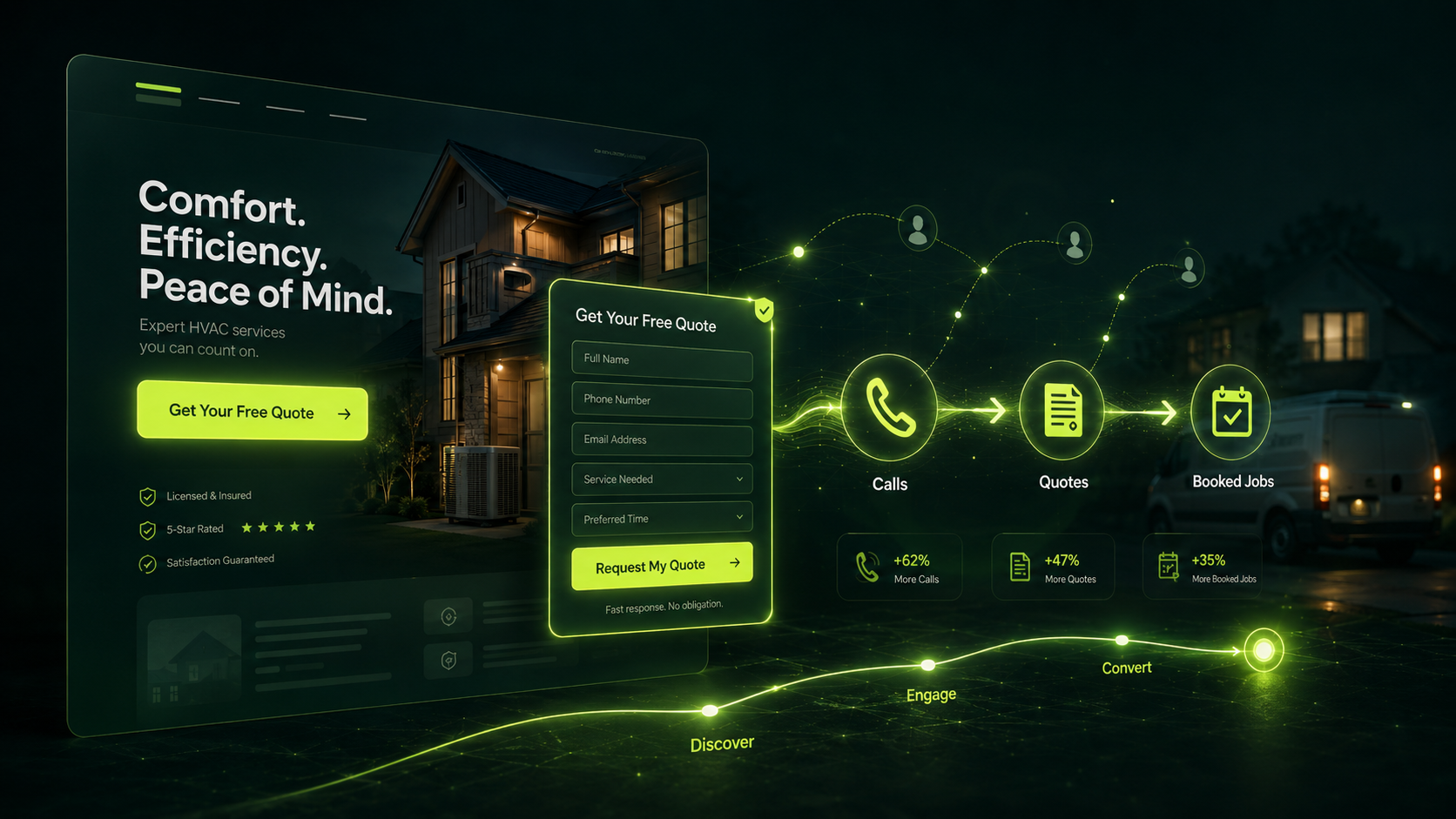
What is conversion optimization for home service companies?
Conversion optimization for home service companies is the process of improving your website, landing pages, and lead flow so that a higher percentage of the people who visit your site actually take action — calling your number, submitting a quote request, or booking a service appointment.
Most home service companies invest heavily in getting traffic. They run Google Ads, build out Local SEO, and optimize their Google Business Profile. But then they lose a significant portion of that traffic because their website does not convert. Visitors land on a slow page, scroll past a buried phone number, read generic copy that does not speak to their problem, and leave without taking action. That is a lead generation problem — but it is not a traffic problem. It is a conversion problem.
“More traffic does not fix a broken conversion path. Getting 10x more visitors to a page that does not convert produces 10x more wasted spend — not 10x more leads.”
Service Lead Growth Definition
Conversion optimization for home services is the strategy of improving every touchpoint between a visitor and a lead — from the landing page to the phone number placement to the form design to the trust signals — so more of the right people take action.
For Service Lead Growth, conversion optimization combines landing page strategy, call-to-action clarity, page speed, mobile usability, trust signal placement, form optimization, call tracking, lead flow analysis, and continuous testing to increase the rate at which website visitors become qualified calls, quote requests, and booked jobs.
Why conversion optimization matters more than most home service companies realize
Consider this: if your current website converts 2% of visitors into leads and you spend $2,000 a month on Google Ads to drive 500 visitors, you are generating roughly 10 leads per month. If conversion optimization improves that rate to 4%, you generate 20 leads from the same traffic and the same ad spend. You have doubled your lead volume without spending an additional dollar on traffic.
This is why conversion optimization is often the highest-leverage investment a home service company can make. Every improvement to your conversion rate amplifies the return of every other marketing channel simultaneously — SEO, Google Ads, Meta Ads, Local Services Ads, and direct traffic all benefit when your website converts better.
The Service Lead Growth perspective
We treat conversion optimization not as a one-time website project but as an ongoing discipline. Every campaign we manage, every page we build, and every lead flow we analyze is an opportunity to learn what converts and improve it. The goal is never just more traffic — it is more action from the traffic you already have.
For home service companies specifically, the stakes of conversion are especially high because the phone call is almost always the primary conversion goal. A homeowner with a leaking pipe, a broken AC unit, or a roof damage assessment is not filling out a multi-step form and waiting 24 hours for a callback. They want to reach someone now. A page that makes the phone number hard to find, loads slowly on mobile, or fails to communicate immediate availability loses that call to the competitor whose page does all three things right.
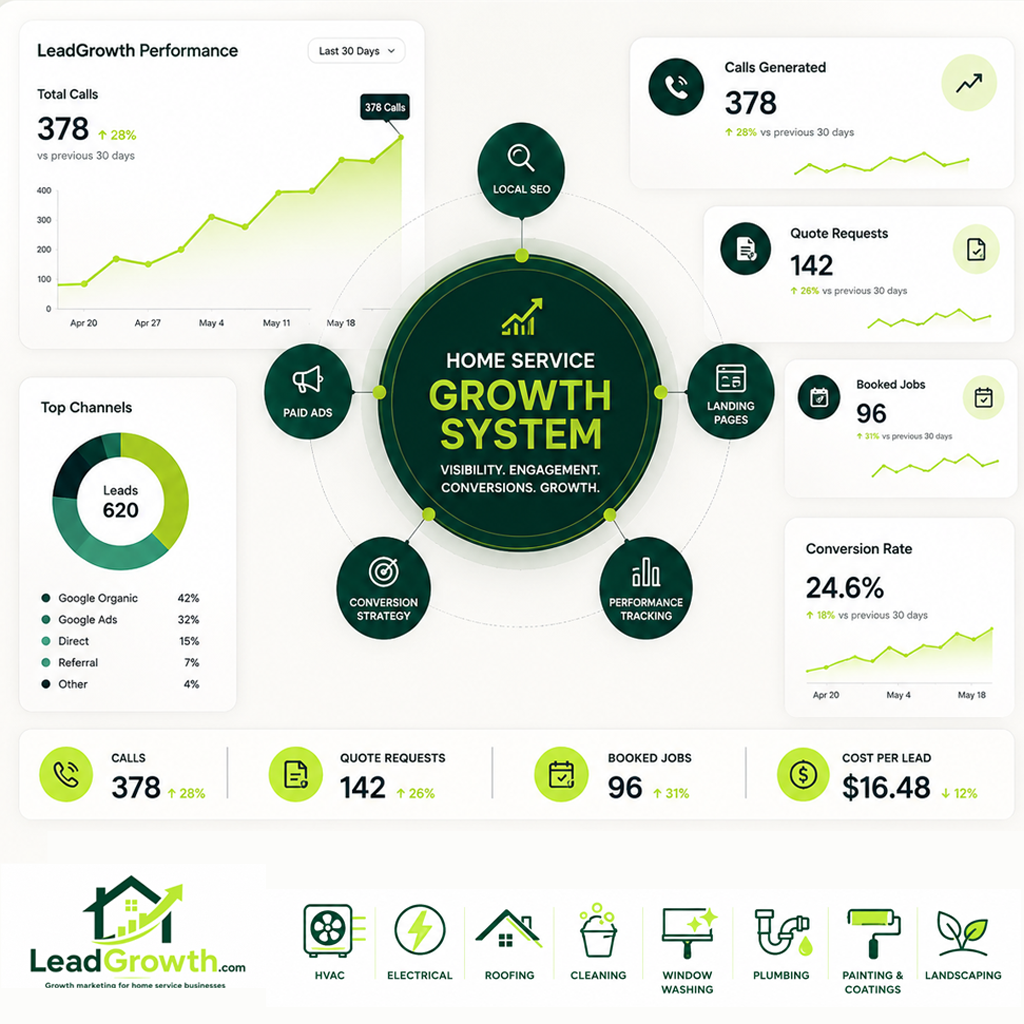
What we optimize for home service lead generation
Conversion optimization for home service companies is not about making a website look better. It is about removing every obstacle between a motivated visitor and a call or quote request. Every element of your page either helps that happen or gets in the way. We identify the obstacles and fix them.
Phone number visibility and placement
The phone number is the most important element on any home service website — and it is astonishing how many companies bury it in the footer or hide it behind a contact form. We ensure your number is visible, prominent, and clickable on every page — in the header, above the fold, and repeated in every relevant section. On mobile, it should be a tap-to-call link that dials immediately. Friction between a homeowner and your phone number costs you calls every day.
Landing page structure and message match
A landing page for a Google Ad about roof repair should be about roof repair — not your company history, not your full services menu, and definitely not your homepage. Message match between ad and landing page is one of the most significant conversion factors in paid search. We design and optimize dedicated landing pages for every major service type and campaign, ensuring that the page a homeowner lands on speaks directly to the specific problem or service that brought them there.
Above-the-fold content and primary CTA
The area visible without scrolling — above the fold — is where most conversion decisions are made. A homeowner should be able to understand exactly what you do, where you serve, why they should trust you, and how to contact you within the first three seconds of landing on your page. We audit and restructure above-the-fold content to communicate these four things clearly and immediately, before the visitor even considers scrolling.
Page speed and mobile performance
Over 70% of home service searches happen on mobile devices. A page that loads slowly, has small tap targets, requires horizontal scrolling, or displays broken layouts on smaller screens loses a significant percentage of its potential leads before they even read your offer. We audit Core Web Vitals, mobile usability, and page load performance and provide specific recommendations to eliminate technical friction from the user experience.
Quote request forms
Every unnecessary field in a quote request form is a reason for a homeowner not to fill it out. We analyze your current form completion rate, identify fields that create drop-off, and recommend the minimum viable form structure that captures the information you need without discouraging submission. For emergency services, a one-field form with a phone number and a “Call me back” CTA often outperforms a detailed multi-step form significantly.
Calls to action throughout the page
A homeowner who scrolls past your primary CTA without acting should encounter another opportunity to take action further down the page — not reach the footer without a clear next step. We place strategic secondary CTAs throughout your pages at the points where visitor intent is highest — after a service description, after a testimonial block, after a trust signals section — so every moment of conviction has an immediate action available.
Service area and availability signals
Homeowners want to know immediately whether you serve their area and whether you are available. Unclear service area information and absence of availability signals — “same-day service available,” “serving [city] and surrounding areas,” “open 7 days a week” — cause homeowners to doubt and look elsewhere. We ensure these signals are prominent, specific, and placed where they have the most impact on conversion behavior.
Our conversion optimization framework for home service companies
Service Lead Growth approaches conversion optimization as a structured, data-driven discipline — not a subjective design exercise. We follow a consistent framework that moves from audit to analysis to implementation to measurement, ensuring every change is grounded in evidence and every improvement is tracked.
1. Conversion audit
We begin with a full review of your current website and landing pages — analyzing page structure, CTA placement, phone number visibility, form design, mobile performance, page speed, message match between ads and pages, trust signal presence, and service area communication. We identify the friction points that are costing you leads right now and prioritize them by impact.
2. Lead flow analysis
We review how visitors move through your site — which pages they enter on, where they drop off, which pages produce the most calls and form submissions, and which pages have high traffic but low conversion rates. Where available, we analyze heatmaps, scroll depth data, and session recordings to understand visitor behavior at a granular level and identify specific points where intent exists but conversion fails.
3. Landing page strategy and development
Based on the audit findings, we build or restructure landing pages to maximize conversion for each major service type and traffic source. This includes writing conversion-focused copy, structuring the page hierarchy for clarity and momentum, placing CTAs at the right intervals, and ensuring full mobile optimization. Each page is designed with a single conversion goal — not a general information dump.
4. Call tracking and conversion measurement setup
We implement or audit your call tracking, form submission tracking, and conversion measurement to ensure you have accurate data on which pages, channels, and campaigns are generating real leads. Accurate tracking is not optional — without it, you cannot make informed optimization decisions and neither can your ad platforms.
5. Continuous testing and refinement
Conversion optimization is not a one-time project. We test headlines, CTAs, form structures, page layouts, and trust signal placement over time — using real conversion data to determine what works for your specific audience, service area, and competitive context. Each test produces learnings that inform the next iteration.
Trust signals and social proof for home service conversion
For home service companies, trust is the primary conversion variable. A homeowner comparing two plumbers, two electricians, or two roofing contractors with similar prices and similar services will choose the one that feels more credible, more established, and more accountable. Trust signals are the website elements that communicate credibility — and most home service websites severely underinvest in them.
Google reviews and star ratings
Displaying your Google star rating and review count prominently on your landing pages — not buried in a footer widget — is one of the highest-impact trust signals available. A header or hero section that shows “4.9 stars — 180+ reviews on Google” communicates more credibility in two seconds than three paragraphs of marketing copy. We identify the optimal placement and format for displaying reviews across your key pages.
Licensing, insurance, and certifications
For electricians, plumbers, HVAC technicians, and general contractors, licensing and insurance are non-negotiable trust requirements for most homeowners. Yet many companies mention these credentials once in a buried “About” section. We ensure license numbers, insurance confirmation, and relevant certifications are visible on service pages and landing pages — where they actually influence the conversion decision.
Before-and-after photos and project galleries
Visual proof of completed work is one of the most powerful conversion assets for visual services — painting, landscaping, remodeling, roofing, and cleaning. A homeowner who sees real projects completed in their area by a team with clear skill and experience is dramatically more likely to request a quote. We advise on photo strategy, page placement, and captioning to make your portfolio a conversion asset rather than an afterthought.
Response time and availability signals
“We respond within 1 hour,” “Same-day service available,” “Available 24/7 for emergencies” — these are not just marketing claims. For homeowners with urgent problems, they are primary conversion triggers. We identify the availability signals most relevant to your services and ensure they appear prominently, consistently, and credibly across your key conversion pages.
Testimonials with specificity
Generic testimonials — “Great service, highly recommend!” — carry limited conversion weight. Specific testimonials that mention the service type, the location, the team member’s name, or a concrete outcome — “They fixed our AC in two hours on a Sunday. Couldn’t believe how fast they came out.” — are significantly more persuasive. We help home service companies develop a review and testimonial acquisition strategy that generates the specific, detailed social proof that actually moves conversion rates.
Call tracking and lead measurement for home service companies
You cannot optimize what you do not measure. For home service companies where the phone call is the primary conversion, accurate call tracking is the foundation of every intelligent marketing decision. Without it, you are spending money on SEO, Google Ads, and website improvements with no reliable way to know which efforts are producing real leads.
Dynamic number insertion
Dynamic number insertion assigns unique phone numbers to different traffic sources — organic search, Google Ads, Meta Ads, direct traffic, referral — so you know exactly which channel is generating each call. This data is essential for making smart budget allocation decisions and for providing Google Ads with the call conversion signals it needs to optimize bidding toward the sources that drive the most calls.
Call recording and quality scoring
Not all calls are equal. Some callers are ready to book. Others are comparing prices. Others are calling from the wrong service area. Call recording allows you to review call quality, identify patterns in how leads are being handled, and improve both marketing targeting and front desk response protocols. We help home service companies set up call recording and use that data to improve lead quality over time.
Form submission tracking
Every quote request form, contact form, and booking form on your website should fire a conversion event in Google Analytics and Google Ads. Without form tracking, your ad campaigns have no data on which keywords and ads produce actual leads versus wasted clicks. We audit your current tracking setup and implement any missing conversion events to ensure every lead source is accurately measured.
Lead source attribution
Understanding which marketing channels, campaigns, pages, and keywords are producing your most valuable leads — not just your highest volume — is what separates informed marketing decisions from guesswork. We build and maintain a lead attribution framework that connects your marketing investment to actual business outcomes: calls, quote requests, booked jobs, and revenue.
Conversion optimization for home service companies: frequently asked questions
What is a good conversion rate for a home service website?
Conversion rates vary significantly by service type, traffic source, and page type. For home service websites, a conversion rate of 3–8% on organic and direct traffic is generally considered healthy. Dedicated PPC landing pages targeting high-intent searches can achieve 10–20% or higher when well-optimized. If your current rate is below 2%, there are almost always significant structural and content improvements that will move it.
Should I fix my website conversion rate before spending more on Google Ads?
In most cases, yes — or at least simultaneously. Increasing ad spend to a page with a low conversion rate multiplies waste. A simple audit to identify the most critical conversion barriers — phone number visibility, page speed, mobile usability, message match — can often be addressed quickly and will immediately improve the return on every ad dollar spent. We frequently run conversion audits in parallel with new campaign launches.
How is conversion optimization different from web design?
Web design focuses on aesthetics, brand presentation, and user experience. Conversion optimization focuses specifically on the rate at which visitors take action. A beautifully designed website can have a terrible conversion rate if CTAs are unclear, trust signals are missing, or the page is slow on mobile. CRO is a data-driven discipline that tests, measures, and iterates based on conversion outcomes — not design preferences.
How does conversion optimization connect to Local SEO and Google Ads?
Conversion optimization amplifies every other marketing channel. Better-converting pages mean more leads from the same organic traffic, lower cost per lead from Google Ads, and higher return on Meta Ads spend. It also provides data — search term reports, landing page performance metrics, call recording insights — that inform SEO content priorities and ad campaign decisions. The three disciplines work as one system.
What does Service Lead Growth measure to evaluate conversion performance?
We measure call volume and call source, form submission rate by page and traffic source, cost per lead by channel and campaign, landing page conversion rate, bounce rate on key entry pages, mobile vs. desktop conversion comparison, and lead quality indicators from call recording analysis. We report on these metrics monthly and connect them directly to campaign and page optimization decisions.
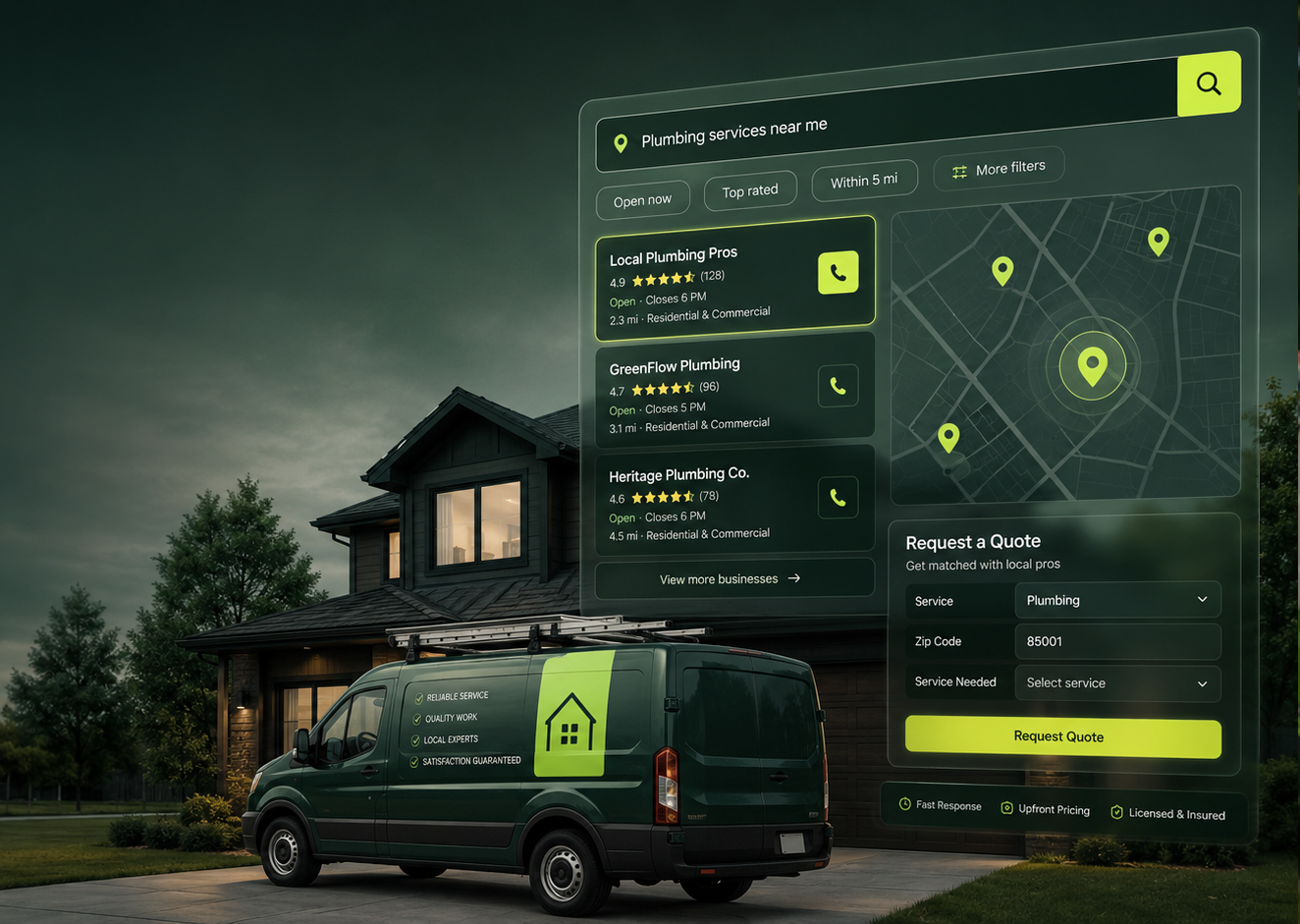
Related Services.
Get a Growth Plan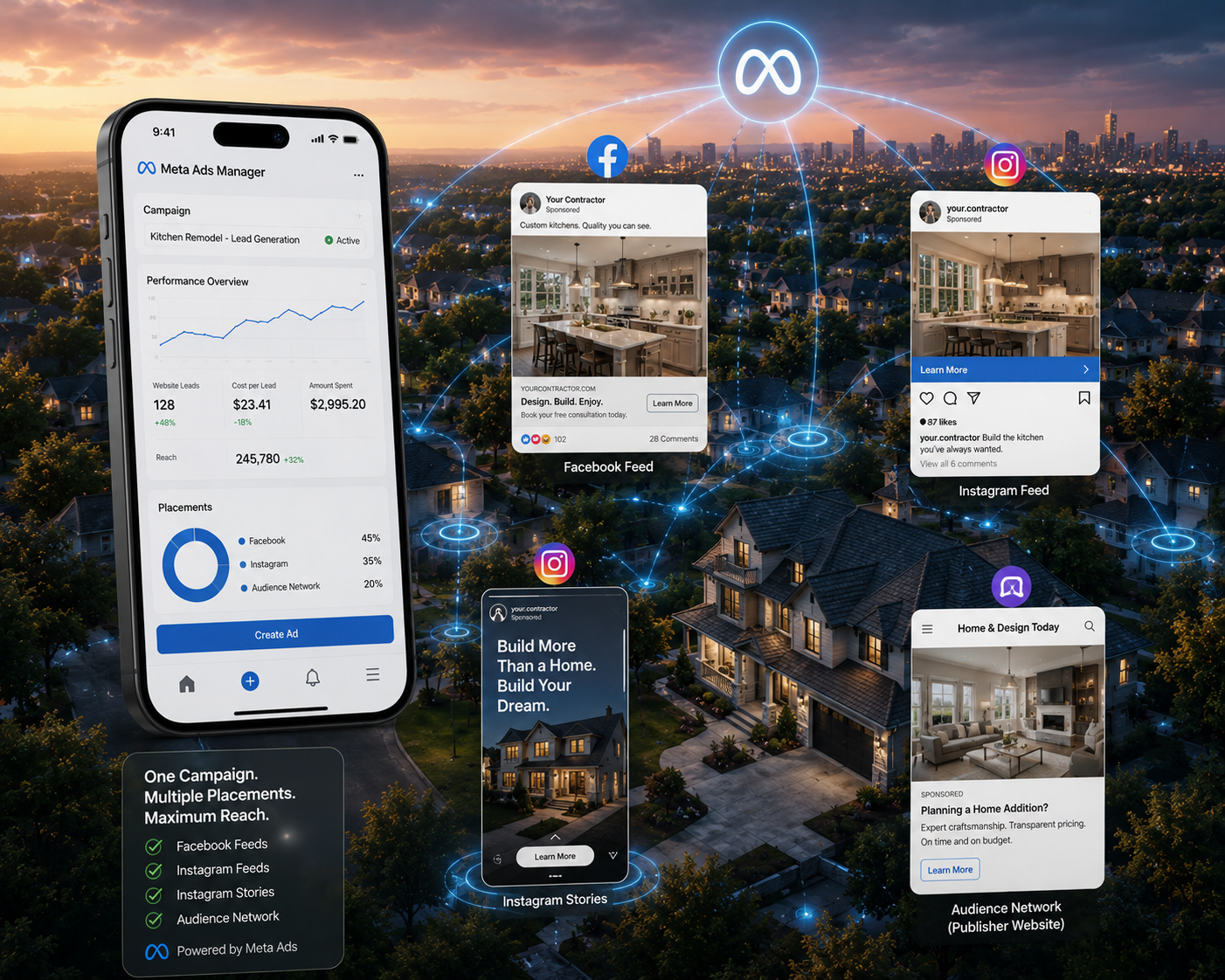
Meta Ads Built to Create More Local Demand
Home service companies turn Facebook, Instagram, Reels, Stories, Messenger, and Audience Network placements into qualified leads, quote requests, and booked jobs through strategic Meta Ads campaigns built around local targeting,...
Google Ads for Home Service Companies
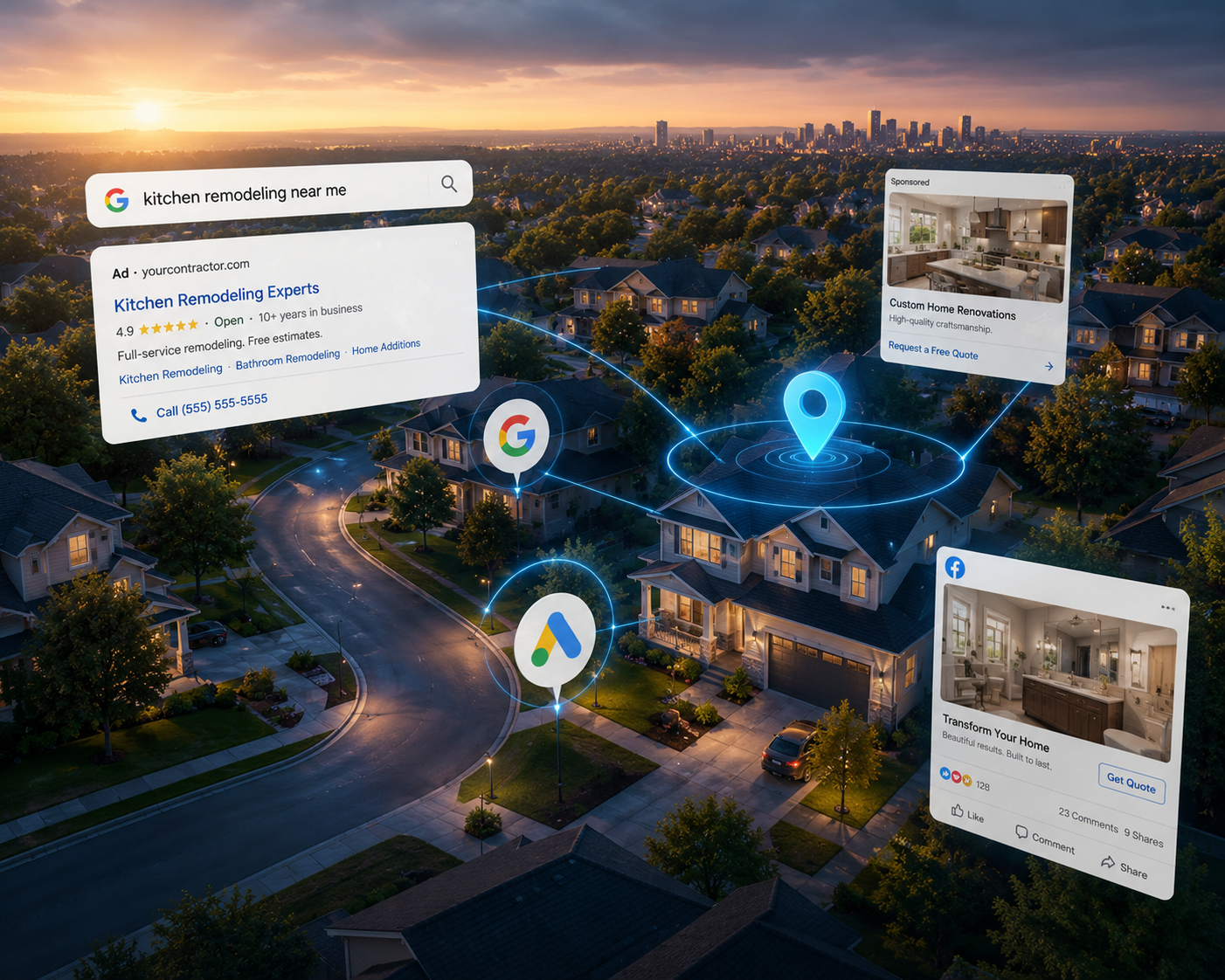
HVAC, roofing, plumbing, electrical, cleaning, landscaping, painting, and other home service companies capture high-intent local demand through Google Search Ads, Local Services Ads, call campaigns, and performance-focused PPC built to...
Request a Growth Plan