
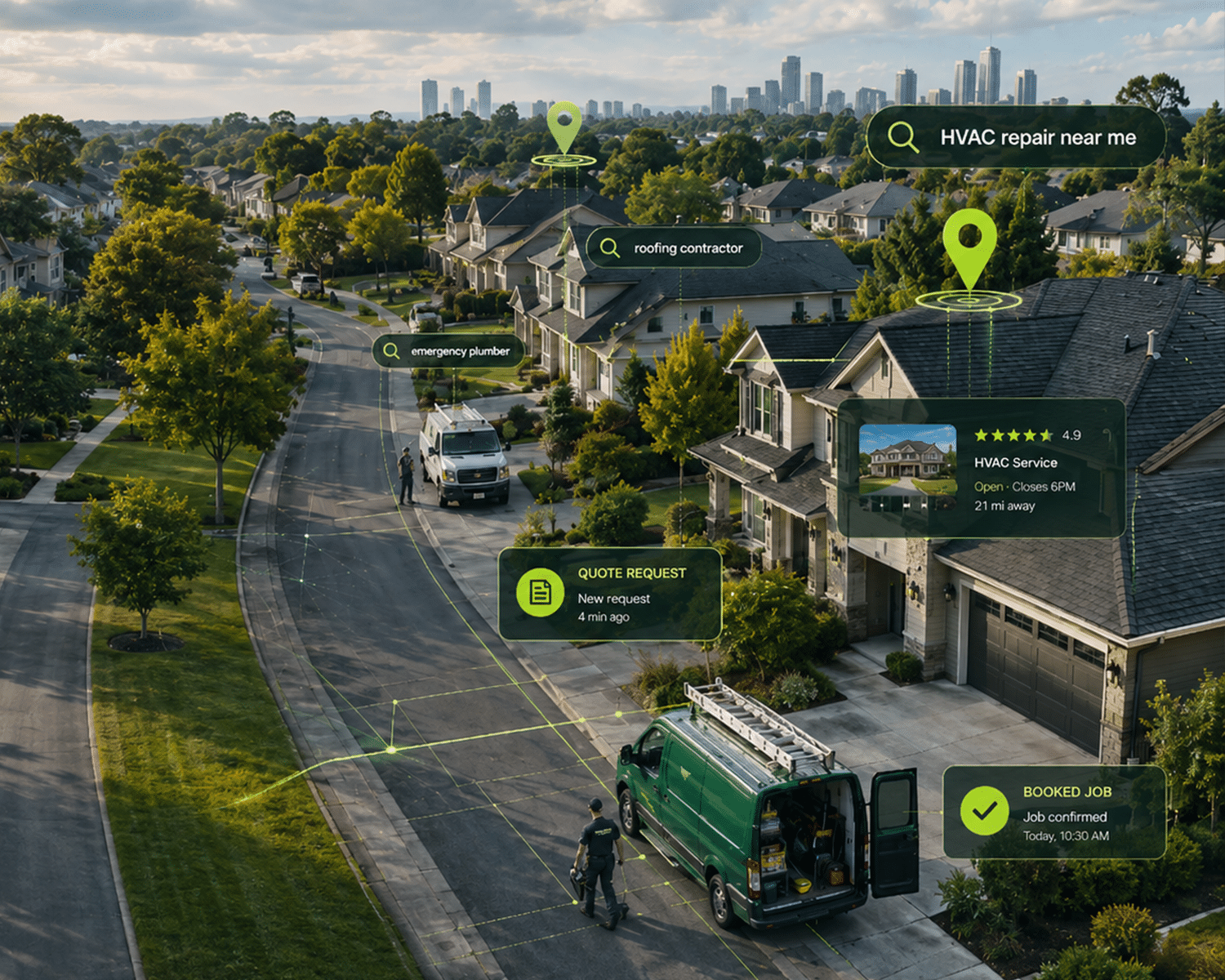
Getting more home service leads from Google in 2026 requires more than ranking for a few keywords or launching an isolated ad campaign.
Homeowners move between Google Search, Google Maps, business profiles, websites, reviews, and paid results before deciding which company to contact. To generate consistent opportunities, your business needs a connected system that helps people find you, trust you, contact you, and receive a fast response.
This is especially important for HVAC companies, roofers, plumbers, electricians, cleaners, painters, landscapers, window washing companies, and other local contractors.
In these industries, visibility alone does not pay the bills. The real goal is to turn local demand into qualified calls, quote requests, and booked jobs.
What Is the Best Way to Get Home Service Leads from Google?
The best way to generate home service leads from Google is to combine six essential elements:
- An optimized Google Business Profile
- Local SEO for your services and service areas
- Google Ads focused on high-intent searches
- Landing pages designed to convert
- Accurate call and lead tracking
- Fast and organized follow-up
Each element supports a different part of the customer journey. When one is missing, the entire system can lose opportunities.
For example, a contractor may receive traffic from Google Ads but send visitors to a slow, generic homepage. Another company may rank well on Google Maps but have incomplete services, weak reviews, or no clear way to request a quote.
A third company may generate plenty of calls but have no way of identifying which campaigns produced qualified customers.
More traffic will not solve these problems by itself. The complete journey must be reviewed, from the initial search to the booked job.
1. Improve Your Visibility on Google Maps
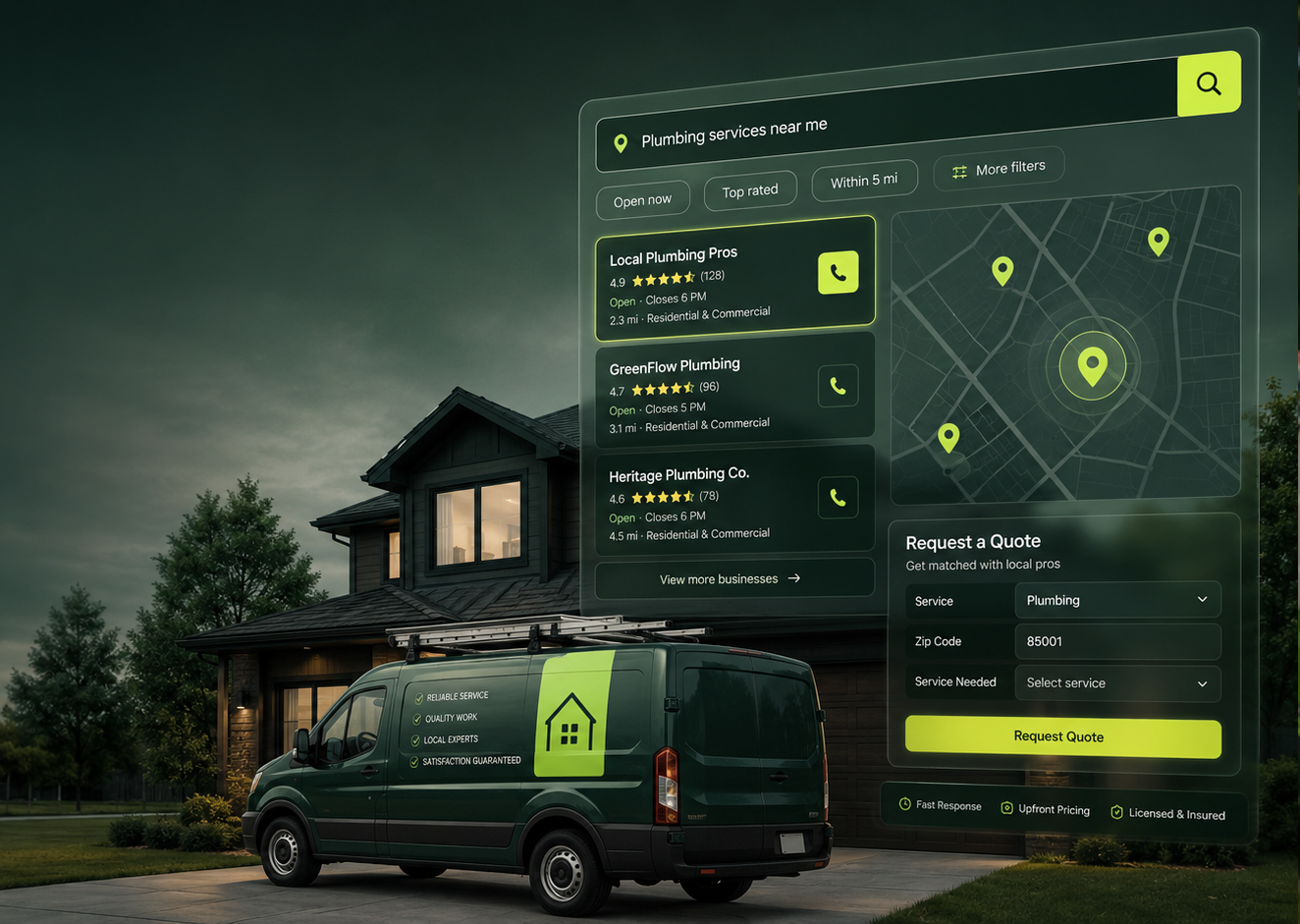
For many homeowners, Google Maps is one of the first places they compare local service providers.
Your Google Business Profile can display your services, service area, operating hours, reviews, photos, phone number, website, and other information that helps a potential customer decide what to do next.
Google explains that local results are primarily influenced by relevance, distance, and prominence. There is no button that guarantees the top position. However, a complete and accurate profile can help Google understand what your business does, where it operates, and whether it is relevant to a particular search.
Start by reviewing:
- Primary and secondary business categories
- Service descriptions
- Service areas
- Business hours
- Phone number and website
- Recent project photos
- Customer reviews and responses
- Duplicate or inconsistent listings

Do not treat your Google Business Profile as a digital business card that can be completed once and forgotten.
It should accurately reflect your current services and give homeowners enough confidence to call your company or visit your website.
Build Local SEO Around Your Services and Locations
Local SEO for home services helps your website appear when someone searches for a specific service in a particular location.
A homeowner rarely searches for a broad term such as “contractor” when there is an urgent problem. Searches are usually more specific, such as:
- Emergency plumber near me
- AC repair in Salt Lake City
- Roof replacement in Provo
- Electrician in Lehi
- House cleaning service in Sandy
- Window cleaning near me
Your website should make it easy for both visitors and search engines to understand:
- What services you provide
- Which locations you serve
- What types of problems you solve
- Why customers should trust your company
- How someone can request help
This usually requires dedicated service pages, useful local content, clear internal links, consistent business information, strong page performance, and a technically accessible website.
For example, an HVAC company should not depend on one general page to rank for air conditioning repair, furnace installation, maintenance, indoor air quality, and emergency services.
Each important service should have a dedicated page that clearly explains the problem, solution, service area, benefits, and next step.
Avoid creating dozens of nearly identical city pages with only the location name changed. Useful local pages should contain genuinely relevant information about the service, location, customer needs, operating area, and how the company can help.
Use Google Ads to Capture Immediate Demand
SEO can build valuable long-term visibility, while Google Ads can help your company appear when people are actively searching for a service right now.
This makes paid search particularly valuable for urgent and competitive home service categories.
Effective Google Ads for contractors should be organized around profitable services, realistic service areas, and customer intent. The campaign should not simply chase the highest possible number of clicks.
A stronger campaign structure considers:
- Which services generate the most valuable jobs
- Which locations the company can serve efficiently
- Which searches demonstrate genuine hiring intent
- Which keywords waste advertising budget
- Which ads match the customer’s immediate need
- Which landing page should receive each visitor
- Which calls and forms become qualified opportunities
Someone searching for “how to unclog a sink” may want instructions for solving the problem independently.
Someone searching for “emergency plumber near me” is much more likely to need immediate professional assistance.
Both searches mention plumbing, but their commercial value is very different.
The goal is not to generate cheap traffic. The goal is to capture qualified demand at a sustainable acquisition cost.
Send Visitors to Landing Pages Built to Convert
Getting found is only the first half of the job.
Once a homeowner clicks your result or advertisement, the page must quickly confirm that your company provides the right service in the right location.

A conversion-focused home service landing page should answer five questions almost immediately:
- Do you provide the service I need?
- Do you serve my location?
- Can I trust your company?
- How quickly can I get help?
- What should I do next?
Use a clear headline, visible phone number, short quote form, relevant reviews, service details, project photos, trust signals, and a strong call to action.
On mobile devices, calling the company or requesting a quote should require as little effort as possible.
Avoid sending every campaign to your homepage.
A homeowner searching for furnace repair should reach a page about furnace repair, not a general homepage that forces them to search through the entire website.
The message should remain consistent throughout the journey:
Search → Advertisement → Landing page → Call or quote request
This alignment reduces confusion and makes the next step clearer.
Track Calls, Forms, and Lead Quality
Clicks, impressions, and website visits can help explain campaign activity. However, they do not tell you whether your home service marketing is generating real business opportunities.
Your tracking should connect marketing channels to actions such as:
- Phone calls
- Quote request forms
- Appointment requests
- Chat conversations
- Booked estimates
- Qualified leads
- Completed jobs, when possible
Call tracking is particularly important for home service companies because many customers prefer speaking with someone directly.
Without proper call tracking, you may know how many people visited your website but not which campaign generated the calls that became customers.
However, counting every call as a successful lead can also create a misleading picture.
Wrong numbers, job applicants, vendors, existing customers, spam, and calls from outside your service area should not carry the same value as a qualified homeowner requesting an estimate.
Lead quality should influence your marketing decisions.
A campaign that produces fewer but better opportunities may be more valuable than one that generates a large number of low-quality inquiries.
Respond Before the Opportunity Goes Cold
Marketing does not stop when a form is submitted or the phone rings.
The handoff between marketing and the person responsible for answering the lead is part of the conversion system.
Homeowners often contact more than one provider, especially when the service is urgent. A slow or disorganized response gives competitors more time to win the job.
Build a simple follow-up process:
- Route new leads to the right person
- Send an immediate confirmation after a form submission
- Return missed calls quickly
- Attempt contact more than once
- Record the lead source and requested service
- Update the lead status after qualification
- Review why opportunities were won or lost
Automation can support this process through notifications, confirmations, reminders, and follow-up sequences.
However, automation should not make the experience feel impersonal. The homeowner still needs a clear and helpful response from someone who understands the service request.
A company can have excellent rankings, attractive advertisements, and a professional website but still lose business because nobody answered the phone or followed up with the lead.
Why These Marketing Channels Should Work Together
The strongest strategy for generating home service leads is not built around a single channel.
Google Maps can create local discovery.
SEO can build consistent visibility for services, locations, and customer questions.
Google Ads can capture immediate demand from people who are ready to hire.
Landing pages can turn attention into calls and quote requests.
Tracking can reveal which channels produce qualified leads.
Fast follow-up can turn those opportunities into booked jobs.
When these areas operate separately, growth leaks become difficult to identify.
A campaign may appear successful because it generates clicks, while the landing page fails to convert those visitors.
SEO may increase website traffic, while phone calls continue to go unanswered.
A Google Business Profile may generate activity, while nobody knows which inquiries became customers.
The most important question is not simply:
“Are we getting more traffic?”
The better question is:
“Where are we losing qualified demand between the search and the booked job?”
How to Know What You Should Improve First
Not every home service company needs the same solution.
One contractor may need stronger local visibility. Another may need better Google Ads targeting. Another may already generate enough inquiries but lose them because of poor tracking or slow follow-up.
A practical growth review should examine:
- Services and service areas
- Google Maps visibility
- Organic search rankings
- Local competitors
- Paid search campaigns
- Landing pages
- Calls and forms
- Conversion tracking
- Lead quality
- Follow-up processes
Once the most significant growth leaks are visible, improvements can be prioritized according to their potential business impact.
This prevents the company from spending time and money on disconnected marketing activities that look productive but do not generate qualified opportunities.
Frequently Asked Questions
How can a home service company get more leads from Google?
A home service company can generate more leads by combining an optimized Google Business Profile, local SEO, high-intent Google Ads, service-specific landing pages, conversion tracking, and fast lead follow-up. These elements should operate as one connected system.
Is SEO or Google Ads better for home service leads?
They serve different purposes. SEO builds organic visibility over time, while Google Ads can capture people actively searching for a service immediately. Many home service companies benefit from using both instead of depending entirely on one channel.
Does Google Business Profile help generate calls?
An accurate and optimized Google Business Profile can help customers discover your company and take actions such as calling, visiting your website, or requesting directions. Performance also depends on relevance, distance, prominence, competition, reviews, and the quality of your profile.
Should every home service have its own landing page?
Important services usually benefit from dedicated pages because each page can address a specific customer need, search intent, service area, and call to action. These pages should be genuinely useful and should not be mass-produced duplicates.
What should a home service company track?
Home service companies should track phone calls, quote forms, appointment requests, qualified leads, booked estimates, and completed jobs whenever possible. Marketing decisions should be based on lead quality and business outcomes, not clicks alone.
How quickly should a home service company respond to a lead?
The company should respond as quickly as its operation allows, especially for urgent services. Immediate confirmation, clear lead routing, prompt callbacks, and multiple contact attempts can reduce the chance of losing the opportunity to a competitor.
Turn Local Visibility Into Qualified Opportunities
Generating more home service leads from Google is not about finding one secret tactic.
It requires a clear path from visibility to conversion and from conversion to follow-up.
LeadGrowth reviews your local visibility, Google Business Profile, SEO, paid campaigns, landing pages, tracking, and lead quality to identify where growth may be blocked and what should be improved first.
Request a Growth Audit and discover where your business may be losing qualified calls, quote requests, and booked jobs.
Related Readings.
View All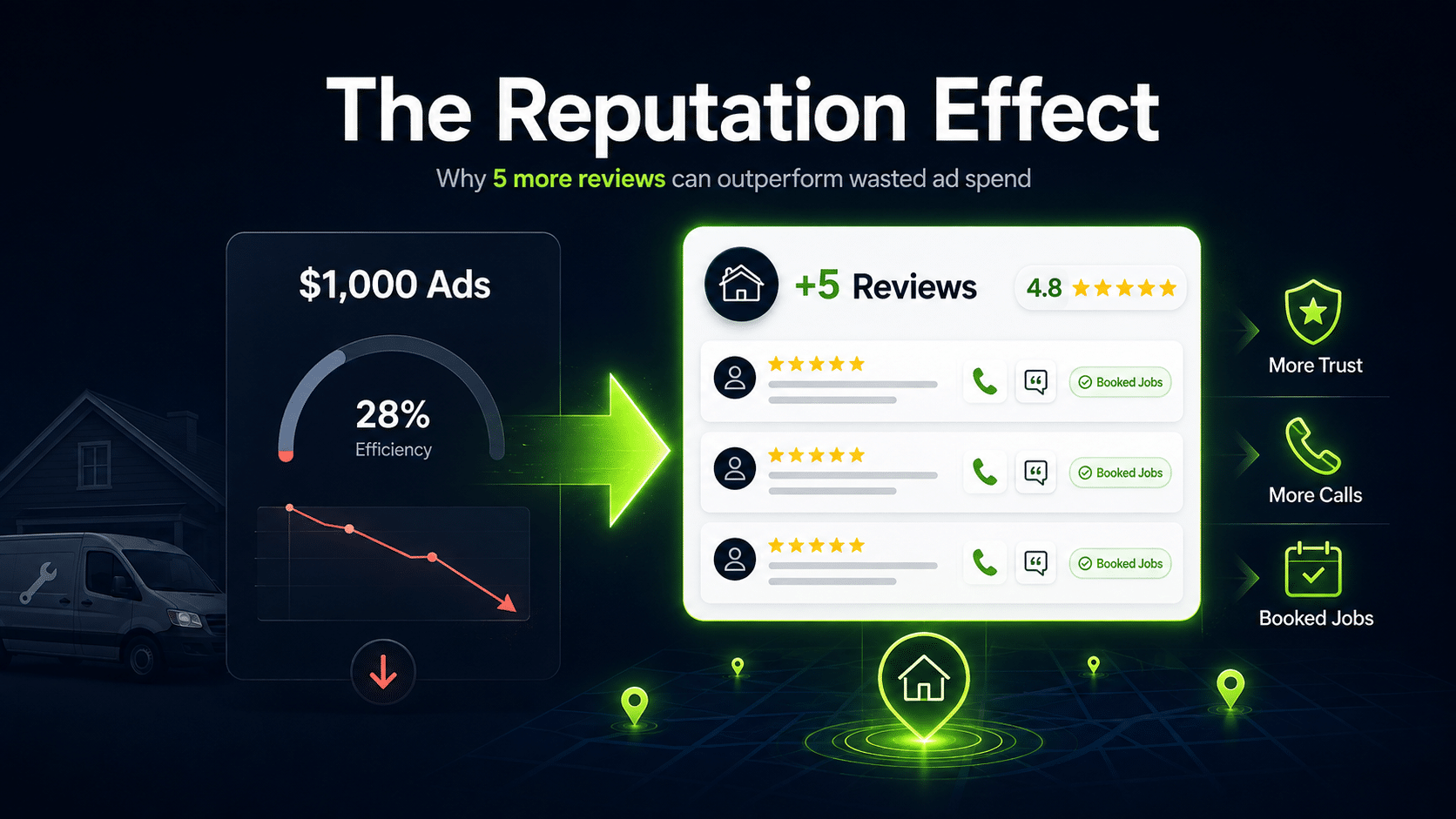
The Reputation Effect: How 5 More Google Reviews Can Outperform $1,000 in Ad Spend
Most home service companies know exactly how much they spend on advertising every month. $1,000. $3,000. $10,000. Maybe considerably more. Ask the same owner how many new Google reviews the...
Read Story
Prompt Farming: The New Keyword Research for Home Services
Here’s a scenario that will change how you think about content forever. Same problem. Same homeowner. Same purchase intent. But watch the difference in how they ask. On Google, they...
Read Story